AI and automation are rapidly transforming many industries and even replacing others. Wondering if your line of work is in danger of the same fate is totally a valid question in 2026.
In the Beauty Industry, AI has absolutely made its mark, from smart color formula systems integrated into salons, automatic nail polishing machines, chatbots, and appointment bookings. Why wouldn’t there be some level of concern about investing in your future career just to be called into an office one day and be told you’re being replaced by ChatGPT?
The good news is that a scenario like this is unlikely. Let’s break down why beauty careers are both future-proof and uniquely built to last.
1. The Physical Barrier
Sure, AI can write an essay, perform a job interview, write code, and do graphic design, but beauty services absolutely rely on dynamic, real-time analysis and feedback.
Haircuts and skincare treatments rely heavily on feeling and seeing things like hair texture, density, skin elasticity, growth patterns, sensitivities, damage, and more. While an AI could be programmed with sets of data that make it believe it can do these things, there’s absolutely no replacement for the human hand and eyes.
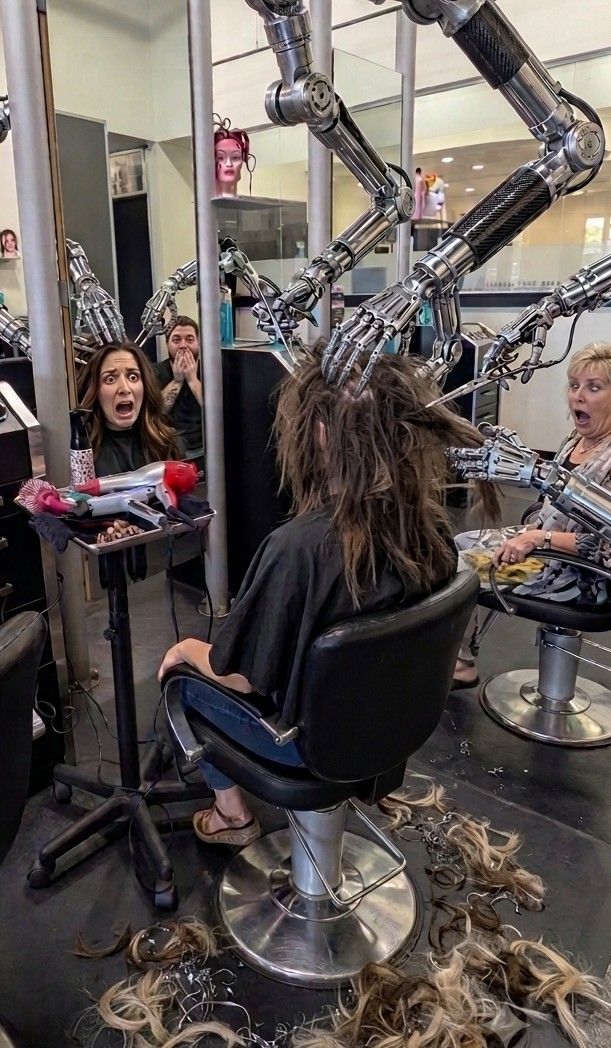
On top of touch and visuals, no two heads or faces are identical. An AI could surely be built to follow a specific design, but what happens when the shape of the head or the growth pattern is wildly different than what it’s programmed for? The systems would struggle majorly with the micro-adjustments and finesse needed. One could even imagine the disaster of a client who moves their head a lot. That bang trim could become a disaster quickly!
2. The Human Experience
Let’s be so for real, we don’t stick with our favorite stylist or aesthetician just because they can perform the service; we keep coming back for the whole experience, the trust, the connection.
Raise your hand if you’ve been personally victimized by a frustrating conversation with an AI chatbot!
First of all, ask any beauty professional, and they will tell you that oftentimes, clients will explain what they want in vague or even conflicting ways. “I want it super light, but not blonde.” Skilled beauty professionals have the experience and ability to read body language, learn about the client’s lifestyle, and can translate that into reality.
As for emotional connection and empathy, an AI typically gives you a list of things you could do to help in a situation you’re facing. Sure, sometimes they give okay advice, but the majority of the time, you’re left wondering why you need to visit your doctor over a squabble with your friend. Empathy is a unique human experience. Why is it that in a hospital nursery, when one baby starts to cry, the rest follow? This is human connection that can’t be programmed; it’s built into who we are.
AI will never correctly understand when a client just needs to vent about their life or when to provide reassurance for fears. It can’t understand a client who needs a quiet service for comfort. Program it all you want, but the reality is it’s looking for keywords and calculating statistical probability. It will never come to fully grasp subtlety, tone, sarcasm, or shifts in the mood.
3. The Bottom Line
Yes, AI will automate mathematics, administration, and inventory; it can even handle the logistics. It will never replace art, creativity, intuition, human touch, or the authentic human connection. The skills gained through experience and hands-on work can never be replicated. Besides, who would ever let an AI cut their hair or wax their eyebrows anyway?
At HDC, we’re committed to helping you develop and sharpen the skills you need to start a successful career in Hair Design, Aesthetics, Lash Enhancement, Makeup Artistry, Nail Technology, or Body Hair Removal through good old-fashioned hands-on practice, building confidence, real-world client experiences, and education from master beauty professionals.